
There is a tradition in every culture that brings people together to share food. In the stories of our foodways, we find a sense of belonging, both in the specifics of a place and in the diversity of a community. Creation stories, ceremonies, and cultural understandings have evolved with food, and through these memories and traditions, people find paths toward health and healing.
For the Native tribes of Wisconsin, traditional foodways are inherently tied to history and identity. During the era of colonization and in the decades since, generations of Native people have been deliberately disconnected from their traditional food sources. A loss of access to lands, broken trade routes, and historical and ongoing injustices have contributed to pervasive health issues and food insecurity across tribal communities.
Today, the twelve tribes living in Wisconsin are working together to reclaim food sovereignty, rebuild intertribal trade relationships, and revitalize their connection with the lands they call home. Sean Sherman, known internationally as the “Sioux Chef,” is a leader in the food sovereignty movement. In his book chronicling the foods of Turtle Island, he writes that sovereignty means recognizing the value of Indigenous knowledge systems and integrating them into contemporary life. “The foodways of each region hold generations of wisdom that address not only nutrition but also spirituality and community well-being.” (Sherman, Sean, with Kate Nelson and Kristen Donnelly. 2025. Turtle Island: foods and traditions of the indigenous peoples of North America. Clarkson Potter/Crown Publishing Group)
TRIBAL ELDER FOOD BOXES
In early 2020 the global pandemic threatened food systems across the country and the world. The resulting isolation, illness, and economic disruption impacted tribal communities particularly hard, and the need for food-assistance programs grew.
Dan Cornelius is a member of the Oneida Nation and describes the pandemic years as an extremely tough time for his community. Cornelius has worked as the Intertribal Agriculture Council's technical assistance specialist for the Great Lakes Region since April 2011. “We lost a lot of elders,” he says, “including many of our knowledge keepers and first-language speakers.”
The USDA Farmers to Families Food Box Program began in May 2020 as temporary emergency relief in response to severe market disruption caused by the global pandemic. More than 173 million boxes of produce, dairy products, and cooked meats were distributed across the country. These boxes were appreciated during hard times, but Cornelius noticed that many of the food items were going to waste. “It just wasn’t what our elders and community members really needed,” he says.
There had been ongoing conversations about providing enhanced nutritional care for elders, but it was during the crushing reality of 2020 that those ideas took shape. In early 2021 Cornelius and the Oneida Nation, along with leaders from the Red Cliff Band of Lake Superior Chippewa and the Menominee Tribe of Wisconsin, started working to source more appropriate foods for their communities’ elders. They received crucial early support from Wisconsin Food Hub Cooperative and Feeding America Eastern Wisconsin, the largest food bank and distribution center in the state. However, it was difficult to source enough culturally relevant and nutritional foods to fill the need.
As a farmer himself, Cornelius understood that tribal farmers were struggling. At that time there were only four tribal producers with the capacity to sell the quantities needed. While Cornelius and partners were able to put together 11,000 food-assistance boxes in the first year, about 60 percent of the contents came from non-tribal producers. Cornelius wanted to find a sustainable way for the program to continue and to build a stable market for tribal farmers, even after the pandemic's challenges moved into the background.
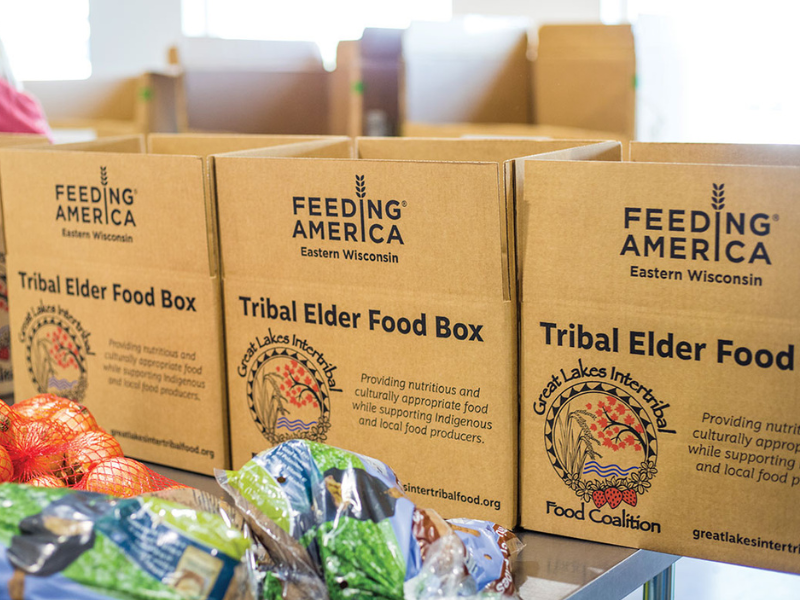
"We went to our leaders and asked them to appoint delegates for a coordinating committee,” he says, and that was the beginning of the Great Lakes Intertribal Food Coalition (GLIFC). Within the year GLIFC was designing an expansive program to meet the real needs of elders while increasing food sovereignty in tribal communities. The Tribal Elder Food Box Program was an intentional tool for reimagining traditional, regional trade routes for indigenous food products.
Jen Falck is a member of the Oneida Nation and the Intertribal Agronomist with the UW-Madison Center for Integrated Agriculture Systems. She has been a key player in designing the Tribal Elder Food Box Program from the ground up. In 2022, when GLIFC launched the Native Producer Capacity and Investment Fund (NPCIF) with support from Feeding America’s national organization, money was made available for equipment, capacity building, and operations. A big part of Falck’s job has been to help tribal farmers and producers "meet their food production and harvest goals.” That includes getting training and funding, expanding operations, and increasing production.
Over 40 tribally owned and managed producers have joined the Tribal Elder Food Box Program since 2022, thanks in no small part to NPCIF and Falck’s work. Drop sites on reservations and in urban and rural centers managed by all of Wisconsin’s tribal nations now distribute brown cardboard boxes full of nutritious products eight months of the year as part of a modern system of care.
“Food is important,” says Falck. “It reflects who we are, what we are, and what's important to us." She believes that in a way, the COVID-19 pandemic had a silver lining. “Pre-COVID, we were not accustomed to meeting like this," Falck notes, adding that platforms like Zoom allowed tribal leaders to work together on grant applications. The conversations online brought everyone together with a remarkable level of trust and enthusiasm. "That's kind of groundbreaking stuff,” she says.
The intertribal partnerships, economic opportunities, and efficient systems developed for the Tribal Elder Food Box Program have received welcome attention. Three million dollars to continue the Tribal Elder Food Box Program was included in the 2025-27 Wisconsin biennial budget. This past July Isaiah Skenandore, a first-generation Oneida farmer, got a phone call from a number he didn’t recognize. It was Wisconsin Governor Tony Evers’ office asking to come visit, and on a warm summer evening Skenandore and his wife gave the Governor a tour. The Skenandores have owned their farm since 2012 and got their first two horned Hereford cows in March 2020. “I call them my COVID heifers,” he jokes. In 2022, when Dan Cornelius was trying to fill boxes for the second year, he called Skenandore to ask whether he had anything he’d be willing to sell to the program. “I just happened to have a cow that was going for processing,” Skenandore says, and he loaded about 500 pounds of beef into coolers in the back of his truck. “Thankfully, it was cold out,” he says. Today Skenandore Farms LLC uses a refrigerated trailer purchased with support from GLIFC. They also now have 56 head of grazing cattle and pasture-raised chickens that are included in the Tribal Elder Food Box Program.
A universal regard for elders and the desire to provide for them has been a motivating force around which all twelve tribal leaders have rallied. Hinu Smith was appointed by the president of the Ho-Chunk Nation to serve as the first executive director of a new Ho-Chunk Nation Department of Agriculture. Around the time her nomination was confirmed by the legislature, she started representing the Ho-Chunk on GLIFC.
Traditional foods “sustain us,” in a way that she views as sacred. An Indigenous lens has been used to envision the design, systems, and definitions for GLIFC’s work. Foods that would have been traded, bartered, and exchanged across the region and continent are now in the boxes, and the ability to eat those foods regularly has been healing for her community. This is significant both for people who know their history and for those who may not have grown up with traditional foods.
Katie Koch is the food sovereignty coordinator for the Bad River Band of Lake Superior Chippewa Indians. She says it is important to remember that “all the tribes were connected and we took care of one another,” and she’s pleased that GLIFC's programs have succeeded in rebuilding relationships that provide what she views as “proper nourishment.” With the right partnerships, she believes, “we can truly build food networks that benefit small-scale producers and our most vulnerable populations.”
Smith agrees, saying that “when tribes win, we all win.” To be a part of the Tribal Elder Food Program is "a badge of honor,” she says, and producers and farmers are proud to be part of a movement that is defining a healthy future for the next generation. “It’s the little box that could.”
CALLING CULTURE BACK HOME
Leaders from the Menominee Tribe of Wisconsin have been instrumental in conceptualizing and realizing the Tribal Elder Food Box Program. Ben Grignon is the Traditional Menominee Arts teacher at Menominee Indian High School, where he uses stories to help his students understand their cultural heritage. He believes that traditional foods carry centuries of history and cultural significance. His wife’s parents receive Tribal Elder Food Boxes and the family has been inspired to use the ingredients to cook dishes that his father-in-law remembers from when he was younger. Family meals from the boxes connect those memories with the stories the family is writing today about their lives and future. “It is called an ‘elder’ food box,” he says, “but it's really intergenerational. It’s a beautiful thing.”
Tribal Elder Food Boxes often contain cornmeal produced by Oneida farmers, many of whom grow corn on Oneida land about an hour south of the Menominee Reservation. For the Oneida people, corn is not just a traditional food: it is a sacred being central to their cultural worldview. The Oneida are part of the Haudenosaunee Confederacy, a governing structure of six tribes whose grand council has been meeting for centuries and continues today. The Oneida Nation entered its final treaty with the United States in 1838, establishing the present-day Oneida Nation Reservation near Green Bay ten years before Wisconsin was a state.
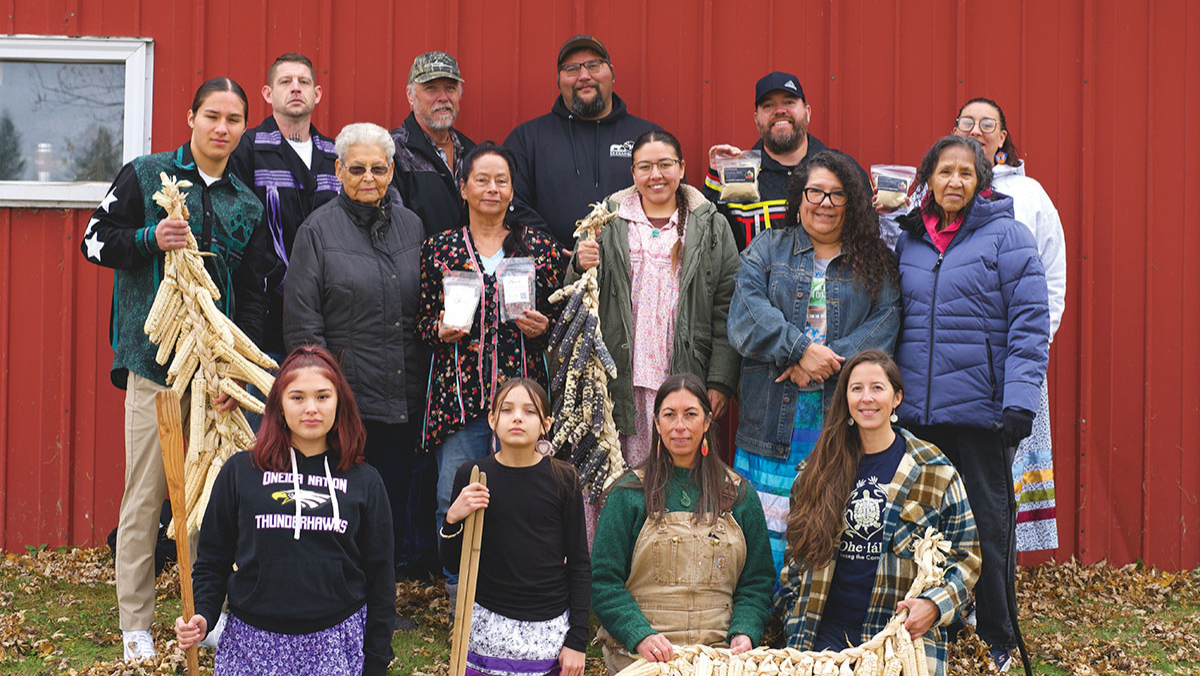
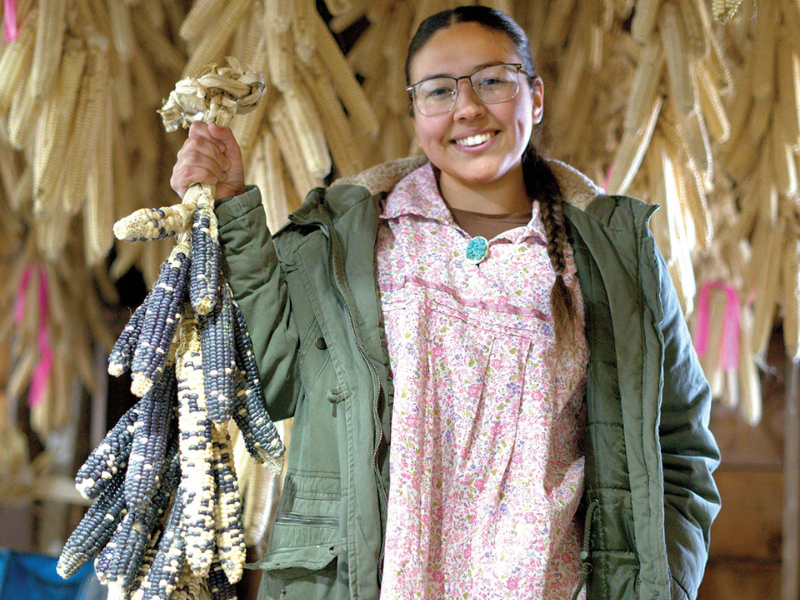
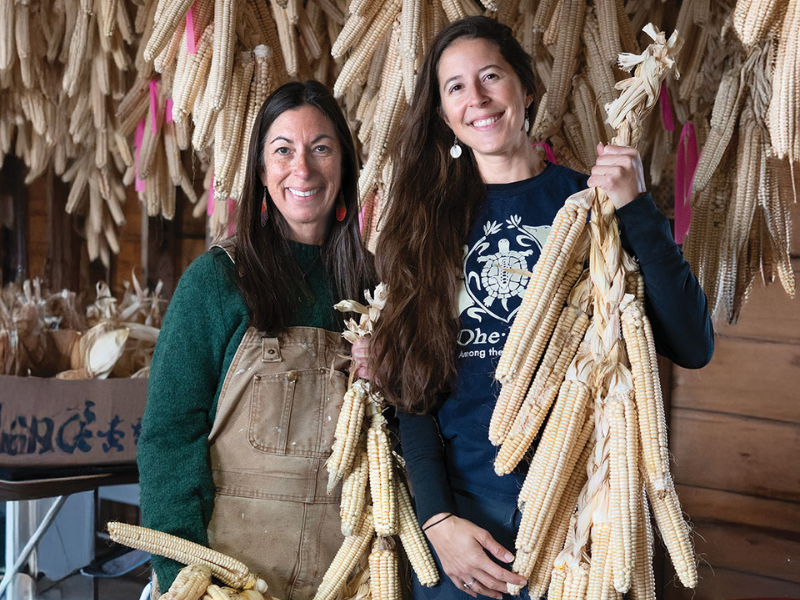
Ohe·láku is a nonprofit made up of Oneida families relearning how to grow traditional Tuscarora White Corn together. For Ohe∙láku farmers, planting and harvesting Tuscarora White Corn is a way of honoring the sacrifice that their ancestors made. “We have a really strong sense of community here,” says Lea Zeise, who is part of the Wolf Clan of the Oneida Nation and a member of Ohe·láku. As a child, she heard stories about her ancestors. "They brought these corn seeds from our homelands in New York and had to choose that first winter whether or not they were going to eat those seeds or be a little hungry and wait until the spring to plant them.” They couldn’t have guessed what life today would be like, she says, “but when we work together and grow together, we are living out some of what they had hoped for us. We fulfill our responsibilities as Haudenosaunee people out of love for one another and out of love for the corn.”
Zeise recalls that when she was a child, traditional corn was enjoyed on holidays and at ceremonies, but there wasn’t enough to eat it regularly. For those of us living in Wisconsin today, where there are fields of cornstalks cut into mazes, fresh cobs sold at roadside farm stands, and silos filled with grain, it may be hard to understand the scarcity Zeise describes. The sweet corn eaten at Midwestern picnics and the feed corn grown for livestock has its genetic origins in corn that grew in the Americas, but it is now very different from the indigenous seeds that the Oneida brought to Wisconsin.
Countless corn varieties have been selectively bred, cultivated and traded for around 10,000 years, making it one of the most important foods in many Indigenous people’s diets. Maize varieties are defined by the internal kernel structure and their proportions of soft and hard endosperm, or starch. Traditional Tuscarora White Corn has been cultivated to be high in protein, low in sugar, and a good source of B12, and it has a variety of culinary uses.
“Our corn continues to be grown and selected to feed people,” Zeise says, and it has adapted to the changing environment over centuries to be resilient and nutritious. Just as people have relied on corn for sustenance, corn needs humans to propagate. “When we consider our seeds, we consider them relatives. They've decided to stick with us, the people,” Zeise explains. “Corn is a big part of our cultural understanding of the world, so having her presence in our lives is really important.”
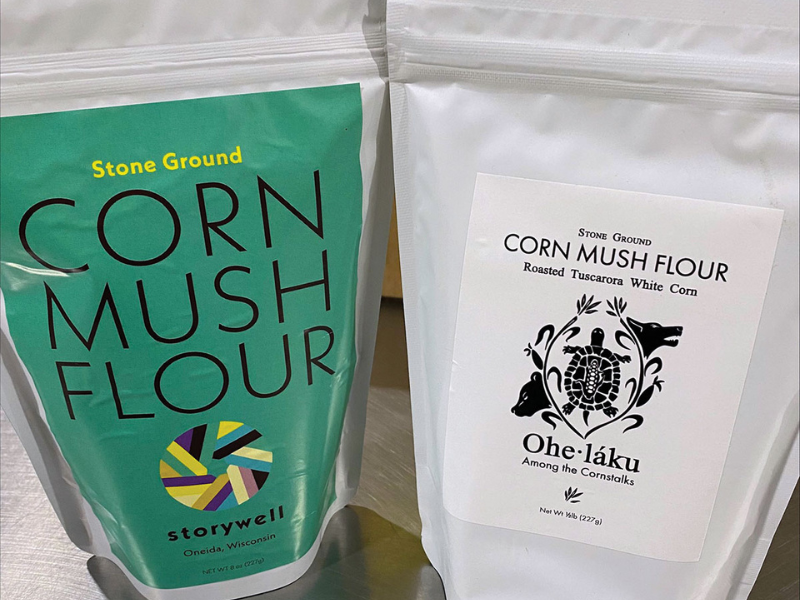
Ohe∙láku farmers began growing heirloom Tuscarora White Corn on a shared plot of land in 2015. As the seeds are considered relatives, the families did not want to sell the corn itself, but they were interested in making traditional corn products like cornmeal more available. The Tribal Elder Food Box Program presented a dependable market that aligned with Ohe∙láku's long-term vision.
Support from GLIFC allowed Ohe∙láku to partner with small commercial kitchens to roast larger quantities of corn and, with help from Meadowlark Farm & Mill, to find equipment to grind larger quantities of cornmeal. Feeding America Eastern Wisconsin provided guidance for labeling the cornmeal for mass distribution.
Zeise appreciates the ways that Ohe∙láku farmers have grown in capacity while also fulfilling their own hopes. “We have corn all the time at our house,” Zeise says, “and our traditional foods are once again a mainstay of the cultural diet and worldview." For the Oneida families of Ohe∙láku, and for all who are eating their products, the scarcity that Zeise remembers from her childhood has become part of their story of resilience. Every time traditional foods are part of the meal, she feels a communion with her ancestors.
"Our DNA remembers this food,” she believes. When it is 15 degrees outside and she’s husking corn late into the evening, or working weekends to roast corn flour, Zeise knows her own nana and children will get to eat a bowl of hot corn mush for breakfast. She knows they appreciate it because they tell her all the time.
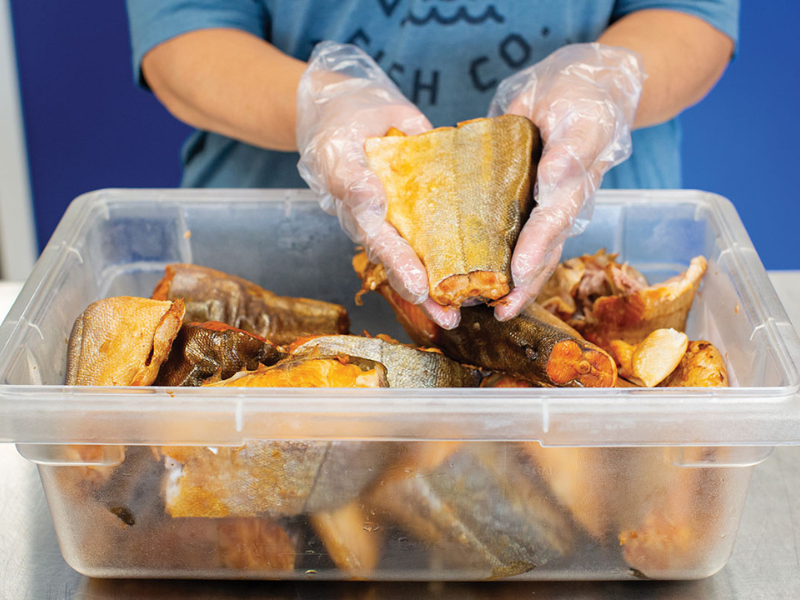
Further north, on the shores of Lake Superior, fish are central to the diet of the Red Cliff Band of the Lake Superior Chippewa. Fishing is an important part of their cultural identity. As the Red Cliff Fish Company website explains, “fishing is more than what we do – it’s at the center of who we are.” Entirely owned and operated by the tribe, they were one of the first producers to sell to the Tribal Elder Food Box Program.
The Anishinaabe are one of the largest Native populations across the continent. Also known as Ojibwe or Chippewa, their legends tell of a prophecy that urged them to find "food that grows on water,” and they settled in the Great Lakes watershed, where manoomin, commonly called wild rice, and fish were plentiful. The region’s waterways allowed for movement and trade, and the population expanded.
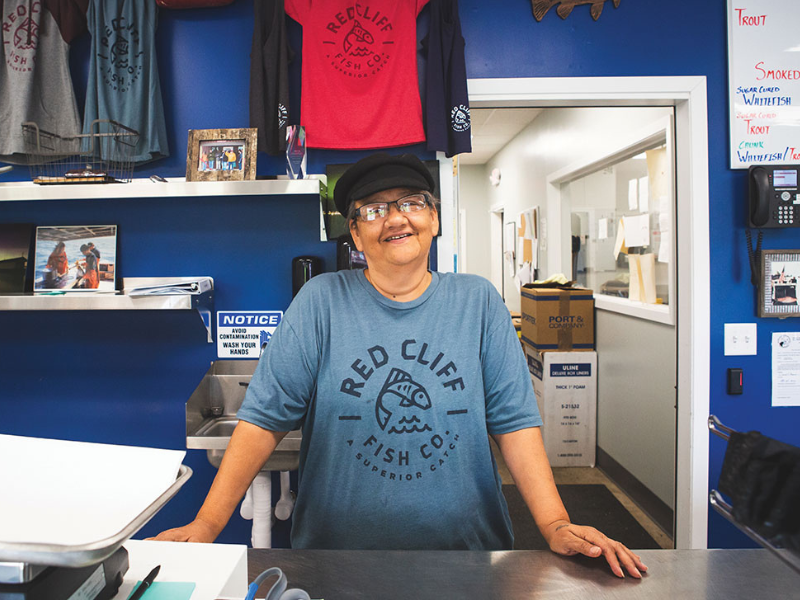
Marvin Defoe is part of the Sturgeon Clan, grew up in the Red Cliff community, and works as the tribal historic preservation officer for Red Cliff. Like Ben Grignon, Defoe uses stories to connect the past, present, and future for the next generation.
Food plays a big part in Defoe’s teaching. One of his favorite things to do is to cook for young people. From the gathering to the preparing and the eating, food must be treated respectfully and handled “with good feelings,” according to Defoe. He layers fresh fish, wild ramps, sweet maple syrup, and manoomin in a log that has been hollowed out like a long bowl. He heats a rock from the shore of Lake Superior and adds it to the bowl, then pieces the log together to create what he calls an “Anishinaabe microwave.” As steam from the food scents the air, he reminds his students that they come from people who invented technologies for survival, created cultures of resilience, and continue to live in harmony with the place the Anishinaabe call home.
At Bayfield High School, where the majority of students are tribal members, he takes his classes out in the winter to make fishing nets in the traditional way. The first time they go out on the frozen lake, he says, “they have their hands in their pockets and stand there watching” as he cuts holes and sets nets. As part of the lesson, he places signs by the different holes labeled youth and elders. They can choose “to pull up fish to feed their elders or feed themselves,” he says. After a few lessons, Defoe keeps his own hands in his pockets and observes the kids as they figure it out. Ninety percent of the time the young folks choose to fish for their elders.
Defoe believes the Tribal Elder Food Box Program reinforces this teaching and exemplifies “Indigenous values put into practice.” When it’s time to pick up a box, he says, his students and everyone can see the long line of cars pulling into the drop site on the reservation. “There might be forty or more cars lined up,” he says, and it feels good to know that the community’s elders are cared for.
“Food has energy - it has bimaadiziwin,” says Defoe, using the Anishinaabe word deliberately for emphasis. It’s a word that means life. He goes on to say what others have said in different ways: Sharing food is healing. Caring for each other strengthens community. Our foodways tie us to the past and the future. Clearly, for Defoe and the many others engaged with the Tribal Elder Box Program, "Food is a medicine."